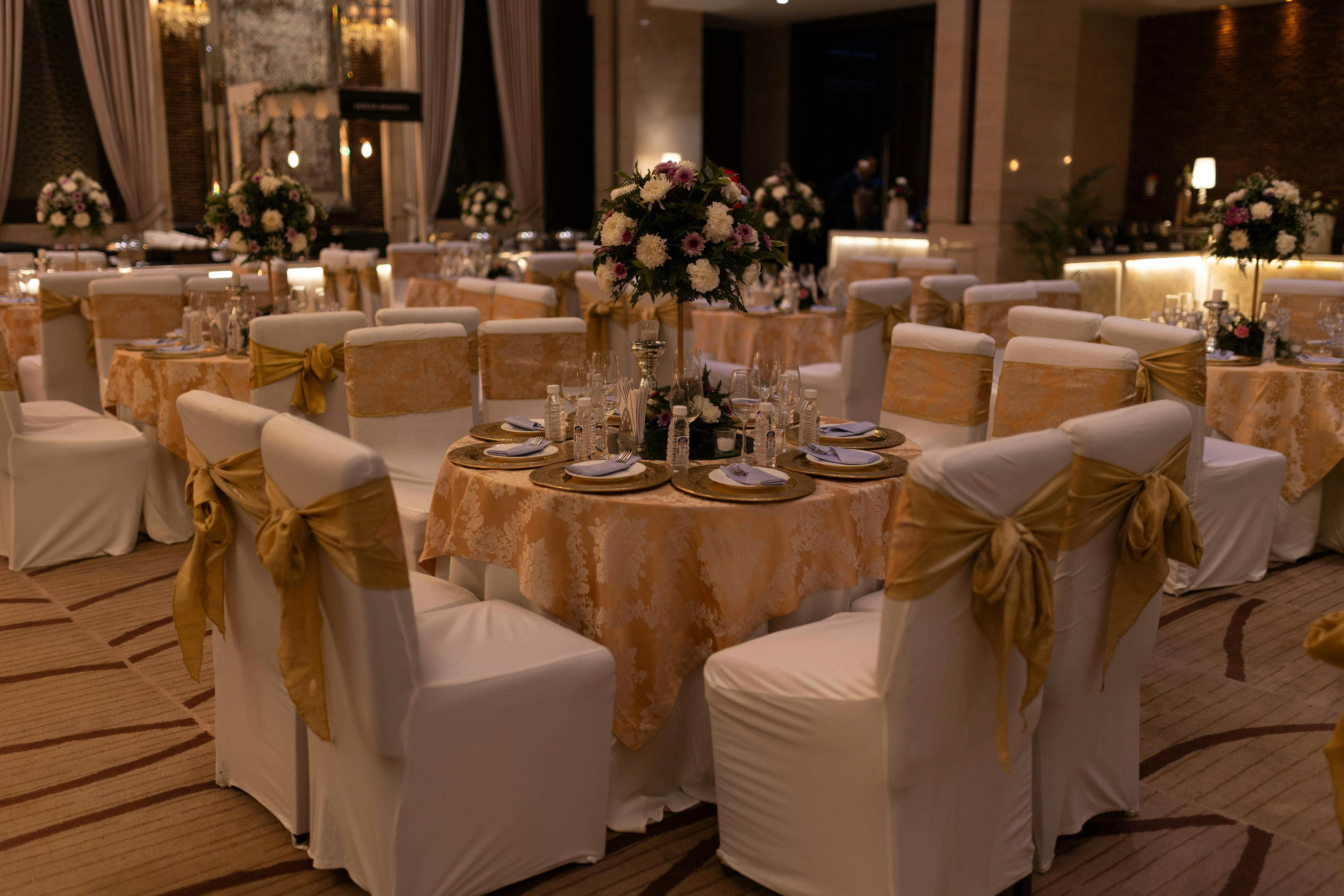
Outdoor weddings are magic — and outdoor wedding AV is a distinct engineering problem. Indoor sound problems are predictable: known room, known power, known distances. Outdoors, every variable is unknown. The venue is a lawn or garden or forest clearing that doesn't have permanent infrastructure. Power might be a single 15A outlet on the side of a barn 200 feet away. Wind will do things to lav mics that indoor ceremonies never encounter. And weather — the reason "the reception is indoors, right?" is the most-asked question in wedding planning — can change your entire plan in a two-hour window.
This guide is for Chicagoland couples and planners preparing for an outdoor ceremony or reception. It covers the specific challenges and how professional AV vendors plan around them.
The weather plan is the plan
Every outdoor wedding needs a weather plan, and the AV setup has to support it. There are three scenarios to think through:
Perfect weather. Original outdoor plan proceeds. This is the easy case.
Rain contingency. Ceremony moves to a tent or indoor backup. The AV setup needs to be movable, ideally with cabling that can be rerun quickly. Some venues have adjacent indoor spaces that make this easy; others require the entire setup to teardown and rebuild.
Wind-only issue. Rare but real. High wind (above 20mph gusts) breaks lav microphones and makes speaker stands unsafe. Some outdoor weddings proceed with a modified setup — handheld mics only, no elevated speakers.
Discuss the weather plan with your AV vendor at least a week out, not the morning of. If a rain call is made at 10am for a 4pm ceremony, the vendor needs time to reset — and knowing the backup plan in advance means everyone knows what they're doing.
Power: often the surprise problem
Indoor venues have plentiful power. Outdoor venues almost never do. A typical outdoor wedding setup needs to power:
- Main PA speakers (usually 300–800W per speaker)
- Wireless microphone receivers
- Audio mixer
- Optional: livestream equipment, uplighting, DJ gear
All of that adds up to somewhere between 5A and 20A of sustained draw. If the venue provides a single 15A outlet 100 feet away from the ceremony site, that's a problem — voltage drop over long cable runs at high current can cause equipment issues.
The professional solutions:
- Confirm power in advance. A venue walkthrough should include locating every accessible power drop, testing outlets with a multimeter, and calculating the maximum draw at each.
- Bring extension gear properly rated for outdoor use. 12-gauge outdoor extension cords (not the flimsy indoor kind), rated for the amperage you're drawing.
- Consider a generator for isolated sites. Small inverter generators (Honda EU2200i, Yamaha EF2000iSv2) can power a full ceremony PA with better reliability than a stretched extension cord.
- Battery-powered PA for very small ceremonies. Some events under 50 guests can be handled with a single battery-powered speaker (Bose S1 Pro, JBL EON One Compact) — no cabling required.
Wind and outdoor microphones
Wind is the outdoor ceremony's biggest audio enemy. Lavalier microphones — the standard for indoor ceremonies — become unusable in even moderate wind because the airflow across the microphone element creates a low-frequency rumble that overwhelms everything else.
The countermeasures:
- Foam windscreens on every microphone. Even indoors, but especially outdoors. A basic foam windscreen removes 60–70% of wind noise.
- Furry "dead cat" windscreens for real wind. These look silly but work dramatically better. Any outdoor wedding in Chicago in spring or fall should have these on lav mics.
- Positional discipline. Officiant lav placed inside the collar, sheltered from direct wind. Not clipped to a tie flapping in the breeze.
- Handheld backup. If wind gets bad, switching to a handheld with a heavy foam windscreen is more reliable than trying to work around a lav.
Cable runs and burial
Outdoor cabling has to travel farther than indoor cabling. A ceremony PA might be 100 feet from the mixer, which is another 50 feet from power. That's 300+ feet of cable to run — across grass, potentially across paths guests will walk on, and in weather.
Best practices:
- Use cable ramps or gaff-tape covers anywhere cables cross walkways. Guests trip on cables. Legally, so do vendors and photographers.
- Bury or protect cables in high-traffic areas. Some venues allow shallow trenching for temporary events; others require overhead runs.
- Use ethernet for long audio runs when possible. Digital audio over ethernet (Dante, AES67) is more resilient over distance than analog XLR and is standard on modern digital mixers.
- Weather-seal connections. Any exposed cable connection should be either in a weatherproof enclosure or wrapped with self-fusing silicone tape.
Speaker placement outdoors
Outdoor spaces don't have walls to reinforce sound the way indoor rooms do. Speakers need to be closer to guests and aimed carefully. Some rules:
- Elevate main speakers on stands 6–8 feet high to project over seated guests to the back rows.
- Use two speakers in a stereo pair flanking the ceremony area rather than a single centered speaker.
- For guest counts over 100, add delay speakers — additional speakers 50+ feet from the mains, delayed to match the acoustic arrival time. Prevents guests in the back from experiencing weird echo effects.
- Never place speakers behind the officiant. Feedback risk is real, and the visual disrupts the ceremony.
Music and streaming outdoors
Outdoor ceremony music needs a reliable source. A phone playing through Bluetooth to a speaker sounds like exactly what it is — an amateur setup. The professional approach is a wired connection from a laptop or dedicated audio device, with the music files pre-loaded and cued.
Livestreaming an outdoor wedding is possible but has extra considerations: cellular reception at the venue (verify in advance), camera protection from weather, and battery life on cameras and other gear that can't stay plugged in.
Common mistakes we see
Assuming the venue's outlet is enough. That side-of-barn outlet is often on a shared circuit with the caterer's warming trays. Cross your fingers is not a plan.
Skipping the site visit. Cannot be overstated for outdoor events. A vendor who quotes without visiting the site is guessing about power, distances, and terrain.
Under-preparing for wind. "It probably won't be windy" is not risk management. Bring dead cats. Bring extra windscreens.
Ignoring the sunlight problem for video. Cameras exposed for direct sunlight during a ceremony where the couple is in shade will produce silhouetted footage. Video coverage for outdoor ceremonies requires exposure planning.
Not confirming the venue's noise ordinance. Some outdoor venues have volume caps enforced by local ordinance, especially for events after 9pm. Design the PA and cutoff time around the actual constraints.
What we bring to outdoor weddings
Our outdoor wedding packages include weather-appropriate speakers (with covers if forecast rain is even a possibility), wireless microphones with fresh batteries and furry windscreens, generator backup for remote venues, ceremony/cocktail/reception zones with independent audio if the venue calls for it, and rain contingency planning built into the contract.
Planning an outdoor wedding in Chicagoland? Request a wedding AV quote and we'll walk through your venue's specifics.